The Medellin Metro is not just a public transit system — it’s the train network that reshaped one of Latin America’s most dynamic cities. Since opening on November 30, 1995, the Medellin Metro has become a symbol of civic pride, sustainable mobility, and urban transformation. In this article, we explore how the Medellin Metro operates today, the unique Metro Culture that defines citizen behavior, its documented history (debunking myths like alleged links to Pablo Escobar), and where you can find more official information and resources about this iconic system.
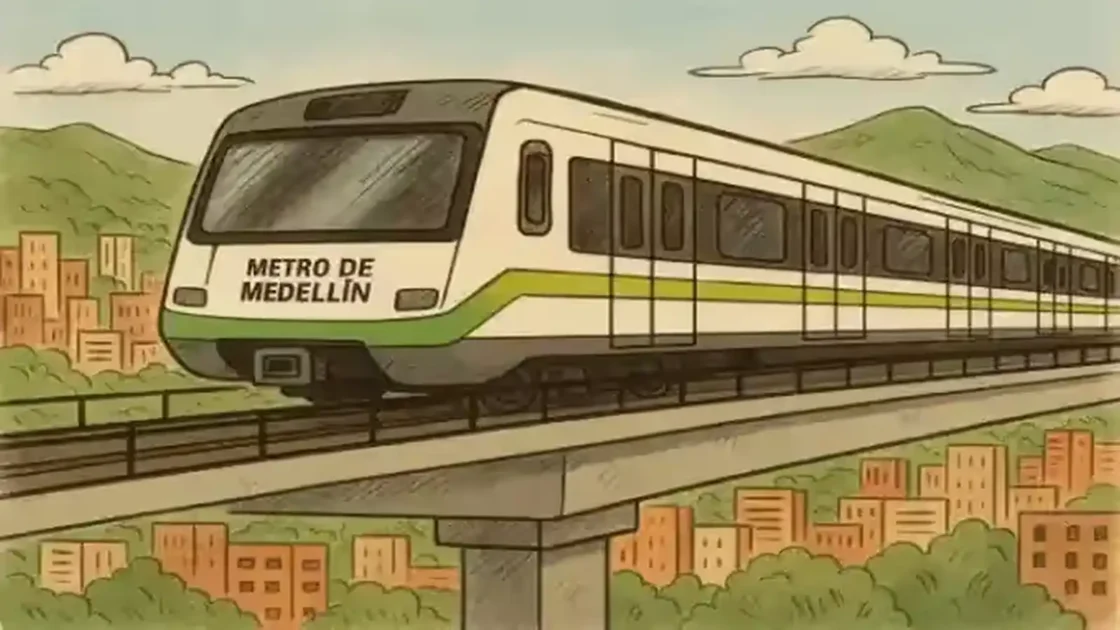
Medellin Metro: how the train system reshaped urban life
The idea of building a subway in Medellin arose in the 1970s, when the city was growing by leaps and bounds and traditional transportation could no longer keep up. In 1979, the Empresa de Transporte Masivo del Valle de Aburrá Ltda. (Aburrá Valley Mass Transit Company) was created with the goal of designing and operating an urban rail system that would connect the north and south of the valley.
The project was approved by the national government in 1982, and in 1984 German and Spanish companies were hired to carry out the construction. But the road was not easy. The project faced delays, financial problems, and a city mired in violence. Between 1989 and 1992, work came to a complete standstill. Medellín was then the most dangerous city in the world, with more than 6,000 homicides per year. The abandoned columns of the viaduct looked like open scars on the urban landscape.
But Paisa society did not give up. With citizen campaigns, institutional support, and iron will, work resumed. On November 30, 1995, the first train traveled the section between Niquía and Poblado, and Medellin breathed differently.
Overview of the Medellin Metro today
Today, the Medellin Metro is the only metro system in Colombia. It has:
Two main railway lines: Line A (Niquía–La Estrella) and Line B (San Antonio–San Javier).
Ayacucho tram: a modern and environmentally friendly system.
Five Metrocable lines: connecting high-altitude areas that are difficult to access.
Integrated bus routes: complementing the transport network.
More than 70 stations distributed across six municipalities in the Aburrá Valley.
The system transports more than one million people per day, with electric trains covering more than 34 kilometers. It has also been recognized internationally for its focus on sustainable mobility and for promoting an exemplary civic culture.
Metro Culture: civic pride and public etiquette
One of the jewels of the system is the so-called Metro Culture. It is not an advertising campaign, but rather a way of experiencing public transportation. Even before its inauguration, values such as respect, cleanliness, punctuality, and coexistence were promoted. Today, it is common to see users giving up their seats, waiting in line, taking care of the spaces, and correcting each other when someone breaks the rules.
Metro Culture has become a model that can be replicated in other public spaces. It proves that civic-mindedness does not require police officers, but rather a sense of belonging.
Did Pablo Escobar finance the Medellin Metro?
No. Although the myth has been circulating for years, there is no official evidence or verified testimony linking Pablo Escobar to the financing or construction of the Medellín Metro.
The history of the metro is well documented. It was promoted by local leaders, the national government, and Paisa society as a direct response to the violence that Escobar helped intensify. The project tender began in 1983, and funding was divided between the national government (40%) and the Department of Antioquia (60%). The final cost exceeded $2 billion, and the project faced multiple stoppages due to the economic crisis and the environment of insecurity.
During the toughest years—when Medellín was synonymous with fear—the metro became a symbol of resistance. Rather than being a legacy of Escobar, it was a project that was built in spite of him, as a commitment to legality, order, and civic-mindedness.
Some sources indicate that Escobar financed projects in working-class neighborhoods to improve his image, but there is no proven connection to the Medellin Metro. In fact, the system represents values that are opposite to those he embodied.
Official resources and how to find more information
If you want to find out about timetables, fares, maps, news, or any other updates to the system, you can visit the official Medellin Metro website. The Cívica app is also available, allowing you to plan journeys, check the status of lines, and top up your user card.
Medellin Metro customer service and contact details
The Medellin Metro offers several contact channels for answering questions or carrying out procedures:
Address: Calle 44 #46-001, Bello, Antioquia
Phone: (604) 444 95 98
Email: contactenos@metrodemedellin.gov.co
Hours: Monday through Friday, 7:30 a.m. to 5:30 p.m.
Documentary video on the Medellin Metro: history, innovation, and future
If you want to find more interesting posts about Colombia, visit our Hispanic Colombian Blog.