
Christmas in Colombia is a deeply emotional and family-centered time of the year. Experiencing Christmas in Colombia without you, while being far from home, changes the meaning of these celebrations and highlights the feeling of Colombia without you. In this article, we reflect on how Christmas is lived in Colombia and how it feels when it is celebrated abroad, in Spain.
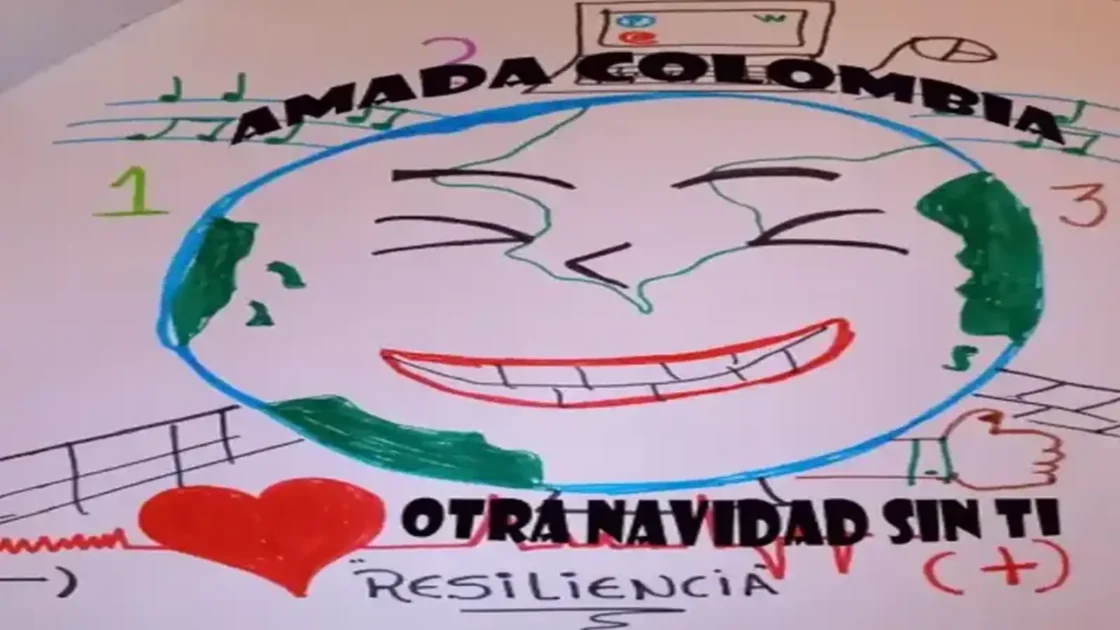
How Christmas in Colombia Feels When Someone Is Missing: Colombia Without You
Another Christmas without you, my beloved Colombia, another Christmas without you, my beloved city of Cali, another Christmas without you, Mom, Dad…
You never get used to it, but since I arrived in Spain, I knew it wasn’t going to be easy to adapt to this country because in Colombia we live with a lot of joy, regardless of the circumstances.
In Colombia, we learn to be happy, and small things become big. We share with our families and join with our neighbours to make Christmas a time of gratitude and joy.
Christmas in Colombia: Traditions and customs
Another Christmas without you, beloved Colombia, right now I can only remember you… Another Christmas without you, my sweet Cali, memories are all I have left until I can return…
In December, the Christmas magic begins for Colombians. During this time of year, we celebrate the Day of Little Candles, decorate the streets with Christmas figures, light up both the streets and our homes, set up the nativity scene for the novena, give gifts to children, and share natillas, buñuelos, and other traditional Colombian Christmas foods. Adults play Secret Santa on December 24 (Christmas Eve) and give each other gifts. But the important thing about these gifts is that they are given with love.
At Christmas, all Colombians eagerly await the birth of Jesus. Families start wondering what we are going to have for dinner on December 24 and 31. Children and adults alike also think about what clothes we will wear on those days.
The long-awaited date we have been looking forward to so much is finally here: December 7 (Day of the Little Candles), when we make a wish for each candle, all the lights in the city are lit, and Christmas carols play on the radio (Mi burrito sabanero, Tutaina, Campanas de Belén, etc.).
Children wait for the arrival of the fair to enjoy the roller coaster, bumper cars, and all the other attractions until New Year’s Eve.
Then we prepare for December 16, when “The Novena for a Joyful Christmas with Gifts from the Baby Jesus” begins. We gather the children in the evenings and take turns going to different houses to perform the Novena. A list is made of the children who will attend so that on December 24th they can be given a gift. Typically, boys are given a car or a ball, and girls are given a doll. All the children in the neighborhood attend every day until December 24th, when they receive the birth of the baby Jesus and a gift that comes with many surprises.
Adults think about how to set the Christmas table so that we can welcome most of the family, and we almost always miss those who are absent, such as those of us who have moved to other countries.
But anyway, thanks to today’s technology, we can see our loved ones. That is, through video calls. But thanks to them, we can share Christmas Eve and New Year’s Eve with them. However, that doesn’t change the fact that at this time of year, those of us who are abroad miss our families and all the Christmas traditions we have in Colombia. It’s not easy, but we have to accept reality and appreciate the people who share their lives with us and give us warmth and a welcome in a country that is different from ours, both in terms of customs and ways of thinking.
Discover how Christmas is celebrated in Colombia with gifts from the Baby Jesus: traditions, joy, and magic that will make you smile. Click and let yourself be infected!
Go and enjoy Christmas in Colombia with Unmissable Christmas traditions for Colombians.
How Christmas is celebrated in Spain
My head never tires of saying Another Christmas without you, my beloved city of Cali, my beloved Colombia
In Spain, Christmas is more peaceful, as the security provided by state security forces such as the national police and the Civil Guard means that Christmas carries less risk of homicide, theft, and robbery than in our country, although that does not mean that it never happens.
Here in Spain, families get together and share many Christmas dishes. The table is filled with food. I don’t know what Spanish Christmas dishes are, but I know they eat shrimp, assorted cheeses, Serrano ham, bread, mussels, stuffed turkey, roast suckling pig, Christmas stew with meatballs, etc. To drink, they serve wine, water, soft drinks, and, of course, coffee.
And, of course, the typical Christmas sweets such as cordials, marzipan, honey and orange cakes, polvorones, and turrón, which come in a multitude of flavors.
In my experience, there is more talking and little or no music at the table. But it also depends on each family, as some families dine while listening to Christmas carols, others don’t miss the king’s message, etc.
There is more order because there is usually a set time between participants and then everyone usually goes home (they don’t usually stay overnight at relatives’ or friends’ houses).
On Christmas Eve (December 24) at midnight, adults go to midnight mass and young people in recent years have been going out to parties in pubs and nightclubs. On the 31st, it is more typical for people over 30 to go out to eat grapes and celebrate New Year’s Eve parties. Young people go all out at nightclubs on this day to celebrate the New Year.
In December, it is very typical on Christmas Eve and New Year’s Eve to dress in black, with women wearing sequined dresses. People also tend to dress very warmly, as it is usually very cold in Spain at that time of year.
On January 6 in Spain, the Three Kings are celebrated with the traditional Roscón de Reyes cake. Children in Spain look forward to waking up to receive gifts from the Three Kings from the East. Although some of them get coal, which is usually made of sugar. Only children who misbehave. What Spanish child has not heard the saying, “Behave yourself or the kings will bring you coal.”
But anyway, in the end, the Three Kings are very wise and generous with children. On December 24, there is a Santa Claus parade, and on January 5, there is a Three Kings parade. They also put up mailboxes for children to deliver their letters to Santa Claus and the Three Kings. I can’t imagine another Christmas in Colombia without you.
Christmas in Colombia vs. Christmas in Spain: reflections
In conclusion, I can say that we must learn to accept reality. In my case, that means living in Spain, away from our country, Colombia, where we were born and raised, but where our goals ultimately took us to another country. Despite being immigrants, we were given the opportunity to change our quality of life and enjoy new cultures and customs because in Spain there are many people with good and honest hearts who are truly worthwhile.
Thank you to those people who are loyal and who prioritize respect, love, and tolerance. Thank you, Spain, for giving us the opportunity to grow, to continue growing, and for giving us opportunities every day. However, I cannot say goodbye without saying, “Christmas in Colombia without you, who are far from your homeland in Spain.”