
Murcia, in the southeast of Spain, has a rich linguistic identity shaped by history, humor, and local traditions. Many expressions from Murcia are deeply rooted in everyday life, yet they sound completely unfamiliar outside the region. In cities like Cali, Colombia, these sayings are often unknown in Cali, creating curious and sometimes amusing misunderstandings.
In this article, we explore unique Murcian expressions that are rarely understood in Cali. Whether you are learning Spanish, interested in regional dialects, or simply curious about cultural differences, these phrases will give you insight into how language reflects local identity and humor.
10 expressions from Murcia that won’t be understood in Cali (Colombia)
Here are a few phrases in Murcian dialect, not in Panocho (Panocho is a traditional dialect spoken in La Huerta de Murcia, a fertile agricultural region in southeastern Spain where we live as a Hispanic-Colombian family).
“Me llevas a Pijo Sacao” in English: You’re taking me to Pijo Sacao – Expressions from Murcia
This expression from the Murcian dialect means, in a nutshell and very expressively, that someone is rushing you too much, that you are stressed, or that someone is putting a lot of pressure on you about something. Here are some examples:
Like walking quickly through the city
“Acho, para un poco, que me llevas a pijo sacao y parezco que voy corriendo pa la huerta.”
In English:
“Hey, slow down a bit, you’re driving me like a maniac and it looks like I’m racing to the vegetable garden.”
When you’re riding in a car with a friend who drives like a maniac
“¡Chacho, frena ya, que me llevas a pijo sacao y me va a dar un patatús!”
In English, this expressions from Murcia is:
“Hey, slow down, you’re driving me crazy and I’m going to have a heart attack!”
Your mother at the supermarket, grabbing things nonstop
“Madre mía, me llevas a pijo sacao, y yo sin desayunar siquiera.”
In English, this expressions from Murcia is:
Oh my gosh, you’re taking me to a fancy place, and I haven’t even had breakfast yet.
At work, when you don’t stop for a second
“El jefe hoy va encendío… me lleva a pijo sacao, ni me ha dejao ir al baño.”
In English, this expressions from Murcia is:
“The boss is really fired up today… he’s driving me crazy, he won’t even let me go to the bathroom.”
When hiking with someone who walks very fast
“Tú te has pensado que esto es la maratón o qué, si me llevas a pijo sacao, alma de cántaro.”
In English, this expressions from Murcia is:
“Do you think this is a marathon or something, taking me out like this, you innocent soul?”
“Acho Pijo” in English: Hey, dude! – Expressions from Murcia
It’s a very Murcian and expressive way of reacting to something. It’s like a verbal outburst when you’re surprised, indignant, or excited. And when said with that thick accent from the Murcia countryside, it sounds even more authentic.
In case it’s not clear, here are some examples:
This Murcian expression can express surprise
“¿Sabes que Karime Andrea se ha comprado un Tesla?“
“¡Acho pijo! ¿Pero de dónde ha sacado la pasta esa?”
In English, this expressions from Murcia is:
“Did you know that Karime Andrea bought a Tesla?”
“Hey, dude! Where did you get all that cash?”
It can also be used to express anger or frustration
“Otra vez me han puesto multa por aparcar mal.“
“¡Acho pijo, si es que siempre aparcas donde no se puede, macho!“
In English, this expressions from Murcia is:
“I’ve been fined again for parking illegally.”
“Hey, dude, you always park where you’re not supposed to, man!”
Another common use is to express pain or complaint
(You bump into the corner of the table )
“¡Acho pijo, qué dolor más tonto, la madre que parió la mesa esta!“
In English:
“Damn it, what a stupid pain, damn this table!”
It could also have a meaning of laughter or exaggeration
“Dice la María que va a dejar de beber cerveza.“
“¡Acho pijo, si no bebe agua ni por accidente!“
In English, this expressions from Murcia is:
“Maria says she’s going to stop drinking beer.”
“Hey, posh boy, he doesn’t even drink water by accident!”
There are those who use this expression as a daily cry of despair
“He ido al Carrefour Zaraiche y no quedaba ni una barra de pan.“
“Acho pijo, si es que aquí la gente compra como si se acabara el mundo.“
In English, this expressions from Murcia is:
“I went to Carrefour Zaraiche and there wasn’t a single loaf of bread left.”
“Hey, dude, people here are shopping like the world is ending.”
Or simply a typical reaction, nothing more. To help you understand, here’s an everyday expression
Acho pijo, qué calor hace hoy, ni en agosto, eh.
In English:
Hey dude, it’s so hot today, even hotter than August.
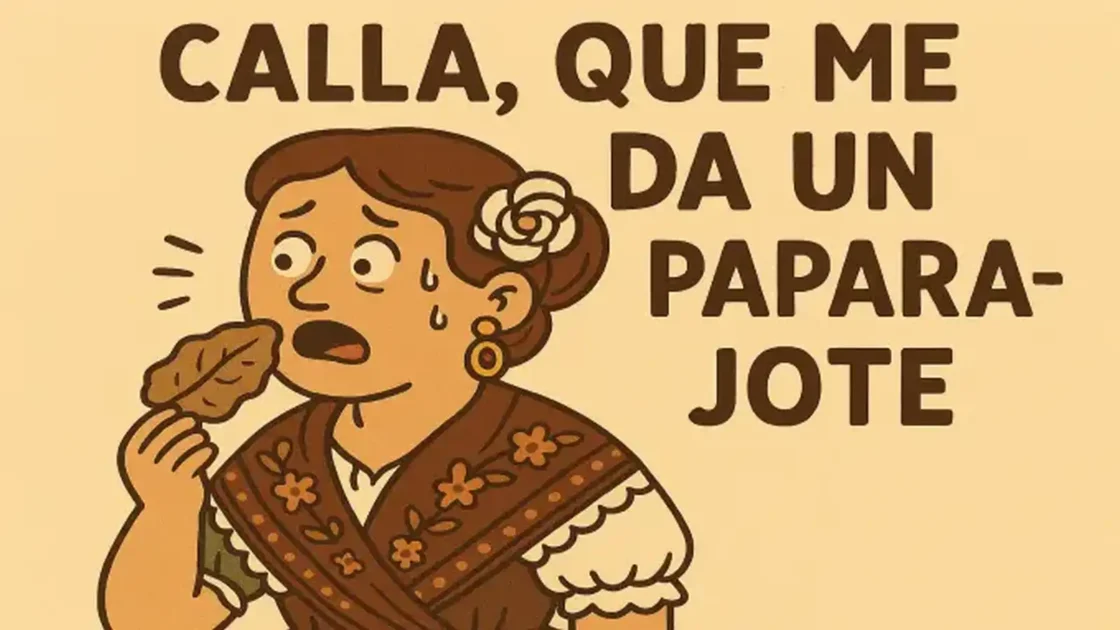
“Calla que me da un paparajote” In English: Be quiet, you’re giving me a headache. – Expressions from Murcia
“Calla que me da un paparajote” is a very colloquial expression from Murcia that is used when something surprises, excites, or shocks you so much that it leaves you half crazy or out of it. Here is a clear example of its use.
Persona 1: Oye, que el Cartagena es mejor que el Real Murcia porque lo digo yo y punto.
Persona 2: ¡Calla, que me da un paparajote!
In English, this expressions from Murcia is:
Person 1: Hey, Cartagena is better than Real Murcia because I say so, period.
Person 2: Shut up, you’re giving me a headache!
“Donde Cristo perdió el porrón” In English: Where Christ lost his wine jug – Expressions from Murcia
The expression “donde Cristo perdió el porrón” (or ande Cristo perdió er porrón, which is more colorful) is a colloquial and very expressive way of saying that something is very, very far away, in the middle of nowhere, or in a remote and difficult-to-reach place. Here is an example of how the expression is used in Murcia:
¿Dónde has aparcao, Manuel?
Tuve que aparcar bastante lejos, ¡donde Cristo perdió er porrón!
In English:
Where did you park, Manuel?
I had to park quite far away, in the middle of nowhere!
“Cuando seas paire, te comerás una sardina entera” In English: When you’re a parent, you’ll eat a whole sardine – Expressions from Murcia
This saying is used to tell someone (usually young) that when they grow up, mature, or become older, they will understand certain things that they do not currently comprehend or appreciate. It can also be used as a kind of “your turn will come” or “you’ll see for yourself.” “Paire” is a deformation of “father” or simply “older person/adult.”
To make it clearer, here are some examples:
Niño: ¡Puaj! ¡Qué asco la sardina esa, yo no quiero eso! Abuelo: Cuando seas paire, te comerás una sardina entera… y mojarás pan en el aceite, ya verás.
In English:
Child: Yuck! That sardine is disgusting, I don’t want it! Grandfather: When you grow up, you’ll eat a whole sardine… and dip bread in the oil, you’ll see.
It can also be applied to issues of responsibility or adulthood:
Joven rebelde: Yo nunca voy a trabajar en una oficina, ni tampoco voy a madrugar para currar.
Madre murciana: Cuando seas paire, te comerás una sardina entera… y con corbata, ya verás tú.
In English:
Rebellious young man: I’m never going to work in an office, nor am I going to get up early to work.
Mother from Murcia: When you’re a grown man, you’ll eat a whole sardine… and wear a tie, you’ll see.
“Me esta entrando la merla” In English: I’m getting the blues – Expressions from Murcia
This colorful expression from Murcia means that you are starting to feel very cold, the kind of cold that makes you shiver or freeze up. La merla is not a bird here… it’s that treacherous shivering of the body!
To give you an idea, here are some examples:
First example:
Tápate, que está bajando la temperatura.
¡Pijo, si ya me está entrando la merla! Mira qué pelos de punta tengo.
In English:
Cover up, it’s getting cold.
Dude, I’m already freezing! Look how my hair is standing on end.
Second example:
Vamos a tomarnos algo en la terraza.
¿En la terraza? ¡Si me está entrando la merla ya solo de pensarlo!
In English:
Let’s have a drink on the terrace.
On the terrace? Just thinking about it makes me shiver!
Third example:
No he traído chaqueta.
Pues verás tú la merla que te va a entrar esta noche…
In English:
I didn’t bring a jacket.
Well, you’ll see how cold you’ll be tonight…
“Cos Tostones” in English: What are Tostones? – Expressions from Murcia
“Con Tostones” or “Cos Tostones” zagales is an expression used to refer to something that is annoying, tedious, repetitive, or laborious, something you don’t want to do or find boring.
Look, as they say, here are some examples:
“Venga ya, que no me apetece hacer esos cos tostones de papeleo.”
“¡Madre mía, qué cos tostones con este tema, siempre lo mismo!””Estar todo el día haciendo cos tostones y no ver ni un avance.”
“Se me ha roto el coche, me he mojado, y encima he perdido el tren… ¡cos tostones!”
“Me puso los cuernos y encima con mi primo… ¡cos tostones!”
In English:
“Come on, I don’t feel like doing all that boring paperwork.”
“Oh my gosh, this is so tedious, always the same thing!” “Spending all day doing boring stuff and not seeing any progress.”
“My car broke down, I got wet, and on top of that I missed my train… what a pain!”
“She cheated on me, and with my cousin no less… what a pain!”
“Tengo los huevos enargolaos” In English: I’ve got my balls in a twist – Murcian expressions
This colorful and authentic expression is used to say that someone is very angry, fed up, nervous, or tense, as if they were under tremendous pressure or discomfort. Sometimes it is also said with a touch of humor or exaggerated complaint. To help you understand, “Enargolaos” comes from “en argolla” (in a ring), as if they were imprisoned, hanging with weight… in other words, one is not in the mood for nonsense.
Here are some examples so you can see it in context:
First example:
¿Cómo llevas el día, tío?
Pues entre el jefe, los atascos y que no me ha dado tiempo ni a comer… tengo los huevos enargolaos, literal.
In English:
How’s your day going, man?
Well, between the boss, traffic jams, and not even having time to eat… I’m literally pissed off.
Second example:
¿Qué tal la reunión con el cliente?
Una hora para decir lo mismo de siempre. Estoy que tengo los huevos enargolaos de tanta tontería.
In English:
How was the meeting with the client?
An hour to say the same old stuff. I’m sick and tired of all this nonsense.
Third example:
¿Otra vez el ascensor estropeado?
¡Otra vez, pijo! Vivo en un quinto sin ascensor… tengo los huevos más enargolaos que una campana.
In English:
The elevator’s broken again?
Again, dude! I live on the fifth floor without an elevator… I’m pissed off as hell.
Fourth example:
¿Vienes al cumpleaños esta tarde?
No sé, llevo una semana que tengo los huevos enargolaos y el alma pidiendo siesta.
In English:
Are you coming to the birthday party this afternoon?
I don’t know, I’ve been feeling exhausted for a week and my soul is crying out for a nap.
Fifth example:
¿Y esa cara?
He ido al banco, luego al ayuntamiento, luego al médico… y en todos sitios me han mareado. Tengo los huevos enargolaos y las zapatillas derretías.
In English:
What’s with that face?
I went to the bank, then to city hall, then to the doctor… and everywhere I went, they gave me the runaround. My balls are aching and my sneakers are melted.
“Beber a gallete” in english: Drink in one gulp – Expressions from Murcia
This expression from Murcia means drinking directly from a bottle or container, without a glass, and usually shared with another person. In other words, putting your mouth on the bottle and drinking “straight from the bottle.”
It is also called “beber a morro” or “a pico,” but “a gallete” has that authentic Murcian charm.
Here are a couple of examples of how they are used:
“No hay vasos, ¿eh? Pues bebemos a gallete.”
“Tráeme la botella y le doy a gallete.”
In English:
“No glasses, huh? Well, let’s drink straight from the bottle.”
“Bring me the bottle and I’ll drink straight from it.”
Sometimes it is also associated with the idea of drinking excessively, or with poor manners, depending on the context, although among friends it is very common and normal.
“No tener fuste” in english: To be insignificant – Expressions from Murcia
If you’ve ever heard someone in Murcia say that something “no tiene fuste” (has no substance), you know that it’s not worth it, doesn’t make sense, and isn’t funny. It’s our way of saying that something is half-hearted, doesn’t cut it, or contributes nothing at all.
In other words: “that’s neither fish nor fowl“.
When do you use it? Well, when you hear a plan that’s weaker than flat beer, or when someone tells you a joke that wouldn’t make a cactus laugh, you say:
“¡Acho, eso no tiene fuste!”
In English:
“Hey, that’s nonsense!”
Real-life examples:
“¿Ir al monte en chanclas? Eso no tiene fuste, primo.”
In English:
“Going to the mountains in flip-flops? That’s ridiculous, cousin.”
And that concludes today’s review of our most authentic Murcian expressions. But it doesn’t end here: we’ll be back soon with more words, sayings, and witticisms from the region that will make you exclaim “¡acho!” with delight.
In the meantime, if you want to continue exploring the language of Murcia and its curiosities, check out Descubriendo Murcia or Murcia Única—you’re sure to discover some linguistic gems there too!
See you next time with more expressions that are more artistic than a party tent!
If you’re looking for something more Colombian, here’s a list of Colombian expressions that my dear wife from Cali made for me in “Colombian Dictionary.”